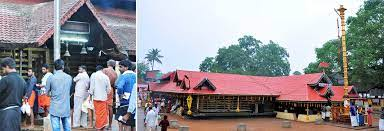
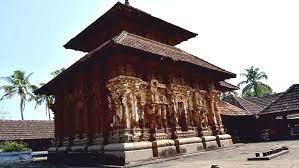
Thrikkakara Vamanamoorthy Temple, Ernakulam
Compiled by
P.R.Ramachander
Thrikkakara Vamanamoorthy Temple, Ernakulam
Compiled by
P.R.Ramachander
Ochira Kali
By
Nagarajan Subramonian
Ochira Kali is a vibrant, traditional martial arts festival celebrated in Kerala, commemorating the historic 1742 battle between the kingdoms of Kayamkulam and Travancore. Held annually on the first two days of the Malayalam month of Midhunam - Aani in Tamil - participants gather at the padanilam (waterlogged battlefield) near the Ochira Parabrahma Temple in the Kollam district to stage a symbolic, energetic mock battle.
Manikkavu Shiva temple, (Wayanad)
Compiled by
P.R.Ramachander
This temple is a distance of 16 km from Sulthan Bathery and
19 km from Kalpetta, Manikavu Temple is a More than 5000 year old Hindu temple located at Choothupara
vilage near Meenangadi in Wayanad district of Kerala. Manikavu Temple is one of
the most visited temple in Kerala and also one of the popular places of
pilgrimage in Wayanad.
The presiding deity of this temple is Lord Shiva in the form of Shiva Linga.
The Shiva Linga at this temple is believed to be Swayambu.The Linga is
always covered with water from a stream, which never stops .Even in
rainy season this water is clear. After doing
abhisheka to lord Shiva , the water goes out and is used by cultivators for farming.A huge forest with lot of swamps is attached to the temple.It seems no one visits the forest
There is a story that
some great sages did great penance in
the forest and Lord Shiva came along with
Gances in the middle of the forest.The sages built a temple around it. It seems it was earlier known as Maha Muni temple and slowly changed to Manikkavu
Timing: 6 AM - 11. 30 AM & 4.30 PM - 8.30 PM
Pulpalli Sita devi , lava, kusha temple , Wayanad
Compiled by
P.R.Ramachander
The Sree Seetha Devi Lava Kusa Temple at Pulpally in Wayanad district has a unique position among the temples of Kerala, and it is also among the rarest temples in India, for it is one of the only known temples to have installed deities of Lava and Kusha, children of Sree Rama and Seetha Devi, with active worship continuing. The legend of Sita, and her children Lava and Kusa is closely linked to this temple. It is believed that even the name Pulpally is connected to the bed of grass (Dharbha) on which Lava is believed to have played as a child.
The temple pond is one of the largest in Wayanad. The etymological meaning of "Seetha" denotes soil or earth. This place and the surrounding areas are believed to be the key places in the Hindu epic Ramayana. It is believed that when Seetha was abandoned by Rama, she reached Pulpally and was given shelter by the great Sage Valmiki. The place in Pulpally where Sita gave birth to Lava and Kusa, is called Valmiki Ashramam. Chedattinkavu or the Sree Chedattinkaavilamma Seethadevi Temple, is the original temple or 'moolasthanam' of Pulpally Temple. These two sites are also open for the public to visit. The Valmiki Ashramam, is to this day maintained in its original ashramam like appearance.
According to the legend Lava and Kusa the two sons of Seetha Devi stopped and caught the horse sent by Rama as part of the Ashwamedha. When Rama came to free the horse, he saw Seetha and immediately she disappeared in the earth, her mother.
While going down, her hair was caught by Rama and thus the name Chedattinkavu or Jadayattakavu to the spot. Chedattilamma (Seetha Devi) is the presiding deity of this temple along with Sapthamathrukkal. This temple is only 1km away from the present Sita Temple. Nei (ghee) vilakku is a main offering here.
The Seetha Devi temple of Pulpally was constructed by Sri Pazhassi Raja in the 18th century. He managed the temple for many years. The meetings and discussions with his army chieftains were held in the courtyard of this temple. Later the management of this temple came in the hands of the Kuppathode family and the renowned Nair family in Wayanad. At that time most of the important temples in Wayanad were managed by different Nair families. The moopil nair (the chief) of Kuppathod family stayed at Nellaratt edom the headquarters of the family. Even now, a member of this family is designated as the trustee for the management of the temple.
During the military assault, Tipu sultan of Mysore planned to destroy this temple. But it is believed that he had to retreat because of the darkness created at noon by the supreme power of Goddess Seetha.
Another remarkable thing about this temple is that leeches, that are very common in most parts of Wayanad are not found in the area surrounding this temple. According to the legend, goddess Seetha cursed the leeches that bit Lava and Kusa and banished them from Pulpally. Another significant thing about this place is that a large number of termite mounds (valmeekam) can be seen at different spots. This is associated with the sage Valmiki, who authored the Ramayana. The temple festival, celebrated in the first week of January, also considered to be the regional festival, is attended by a large number of people belonging to different castes and creed.
Best time to visit Seetha Devi Temple
The temple festival takes place in January and is the best time to visit the
shrine. January-February is also the best seasons to visit since the
temperatures are mild. Summers from March-June can be scorching, whereas,
Kerala experiences heavy rainfall during its monsoon season from July-Septemb
Getting there:
Nearest Airport: Calicut International Airport, about 111 km
Nearest Railway Station: Kozhikode Railway Station, about 102 km
Nearest Bus Station: Pulpally Bus Station, about 280 m
Compiled from various sources
By
P.R.Ramachander
Chelakkara is a small town
in Thalapilly Thaluk (granary of
kerala) of Trichur Disrtict, inside the valley
of Machattu mala .
There ia an agraharam of nearly 120 houses(now about 15 ) in this
Village . This agraharam was
built around one of the ancient temple
of Narasimha Murthy , which appears
like a golden thilaka to the agraharam.
People believe that this temple is about 1000
years old.Lord Narasimha murthy faces east .
There
is a story about this temple .It seems Sri
Padmananbhacharya(originally a
Nambudiri) , who was a important Sishya of Adhi Sankara (some people say it was
only a great sage) went to the forest
near here to do Thapas(penance)
and there he saw a hunter who asked him
why he was visiting this dark forest. Then the acharya told him , that
he came in search of an animal, which
had lion’s head , human body and had
hairs and nail like a lion. He also said that he would not return
from forest unless he
finds this animal.The hunter took
an oath that he will find that
animal , tie it and bring it to him.The
hunter without food and sleep started
searching for that animal.Lord
Narasimha took pity on him and appeared
to him.The hunter took wild climbers
in the forest , tied that animal
and brought before
Padmanabhacharya .But the acharya saw only wild climbers but not the animal. Then the hunter took him to the place where he caught the animal.There the acharya could see Lord Narasimha murthy in his mind.He immediately built a
temple for Narasimha Murthy there and started worshipping him.
This temple was given for management
for “Palakattu perada mana” and palakkattu mana”.Later it came under the management of “manithara mana” and Kaippancheri mana” .The king of Cochin by
a record gave this temple to these manas,in Malayalam year 971 in the month of vrischikam (approximately 220
years back)
The pretty form of Lord
Vishnu with four hands was consecrated in this temple., the temple also has sub temples ofLord
Ganesa (who grants all wishes of Devotees) and Lord Sastha who pardons
all sins by devotees worshipping
him.The temple was managed under kerala thanthric system and for several years the Priest
was an Embrandiri. There is a
strong belief that Elephants should not visit
this temple and if they
enter they will die.
There is a belief that Tipu sultan during
his invasion of Malabar attacked this temple.
They introduced
a small chariot function in
this temple during Thiruvadira.Many Brahmin families Started
giving OOttu(feast for Brahmins here).They also started Ganapathi homams in this temple. They
celebrated Swarga vatthil ekadasi, Thai poosam
and Rama NavamiThey
celebrated their festivals
in side the temple.
They built a hall called
(Samooha Madam) for doing
religious functions and called it
Samooha Madam
The major celebration of the temple is the 'navarathri' festival extending up to
dwadasi day, ie. 12 days of festivities. As per the traditions followed by earlier generations, groups of families who were/are residing in chelakkara gramam conduc the functions in a fitting manner. 11 days are celebrated by the groups and the 12th day is known as 'dwadashi vilakku' or 'kuttikal vilakku' is the most famous of
the 12 days.All
families having roots in chelakkara, wherever they are attend this festival.
In the year 1972, Swami
Jayendra saraswathi of Kanchi Mutt
visited this temple and requested
to repair the temple and
conduct Kumbabhishekam ,From then on the
Brahmins make it a point to repair the
temple and conduct a kubhbhishekam based on deva prasnam and conduct Kumbabhishekam almost
once in 10-12 years,Kumbhabhishekams have been conducted earlier in 1972, 1996 and 2010.
This year the
Kumbhabhishekam is going to be conducted
on grand scaleon 20-5-2024
The Pin Code of Chelakkara is 680586.It is 12km from Shoranur Jn
Temple worshipping hours Morning Normal days :
Morning 5.30 AM to ( Am
Evening 5.45 PM to 7.45 pm
Howver on festival days temple will be kept open from 5
Am to 10 Am and 5.30 PM to 8.45 pm
On Mahaganapathy homam days: 3.00 - 9.15 am
Evening
5.00 pm - 7.45 pm
How to reach:-
By train
step down in Shoranur junction (14 km) or Wadakkanchery (15 km)or Thrissur(34km)
By bus
From thrissur: Thrissur - thiruvillwamala busThrissur - elanadu busThrissur - mayannur bus
From shoranur:Shoranur - chelakkara via painkulam
Shoranur - chelakkara via panjal
From wadakkanchery:Thrissur - thiruvillwamala busThrissur - elanadu busThrissur - mayannur bus
from palakkad:palakkad - alathur - pazhayannur -chelakkarapalakkad - lakkidi koottupatha-thiruvillwamala-chelakkara
Thiruvimbilappan temple, Venganallur , Chelakkara
Compiled by
P.R.Ramachander
This temple is located in Venganallur , a village adjoining Chelakkara , a small town of Trichur district
Thiruvimbilappan is Lord Shiva and it is believed it was consecrated originally by Saint Parasurama.The God is suppose d to be fierce and is described as “Maha Kala Roopam) ,
The temple has also upadevathas of Parvathi , Ganapathi, Dakshinamurthy , Subrahmanya , Ayyappan, Anthimahakalan, Bhadra kali and Naga devathas.The temple is believed to be built in 11th centuary
story of origin of temple
There was a Namubudiri in Vezhanezhi mana of Chelakkara who used to be a great devotee of Vadakkunathan of Trichur.Due to old age, when he could not go, God shiva assured him that he will come to Chelakkara.
There
was a place in chelakkara surrounded by Veembu(വീമ്പ് (kydia calycina) trees, It seems
one lady who used to grass daily wanted to sharpen his knife chose a stone
to rub and when he did blood came out.
He Informed informed this Namudiri who
built a small temple which developed in to a huge temple over time
story
The sanctum
is round in shape and in the eastern gate there
is a huge gopura.It seems recently the sanctum was roofed with copper plates. And has Golden pot like
structure on top.
The temple is
surrounded by a huge wall,There
is a small Krishna temple facing this temple called Edathara
Krishna temple,While shiva of the
huge temple is facing east , the Krishna of this small temple is facing west.In
between the temples is a temple tank.It is believed that tank was constructed to reduce
fierceness of Lord Shiva and Lord
Krishna
The
temple opens at 5 am and there are five
poojas at thuis temple and three
seevelis.Early morning there is nirmalya
darsanam and after abhishekam , the temple is closed for pooja ,
seven Am seeveli,From 8.30 Navaka pooja , nine am Dhara .(.15 Am ucha pooja,
9.30 Am another seeveli,Ten am temple closes for morning session,it again opens
at 5 PM , athazha pooja at 7.30 Pm followed by Seveli, 7.50 AM tripuka
and temple closes at 8 pm
The
important festivals of temple are Vaikathu ashtami and Shiva Rathri
The temple is less than one km from Chelakkara
junction which can be reached bus
services from various places including Trichur .The nearest railway station may be Wadakkanchery
The telephone contact 09495881631
Kottarakkara Ganapathi temple
Compiled by
P.R.Ramachander
This is one of the greatest Ganapathi temples of Kerala. Though called Ganapathi temple , it is really a part of the Kizhkkekara(eastern) Shiva temple
The story of origin goes like this. The legendary Perum THachan Who was helping to build the Padijattinkara (western) Shiva temple , one day started chiseling a piece of Jack wood while standing outside this temple and without his realizing he made a child Ganapathi idol (unni ganapathi) .He requested the poojari of the temple to consecrate this ganapathi also in the temple.The thanthri refused saying it was a shiva temple. Greatly disappointed the THachan took the statute to Kizhakke kara temple and the thanthri there agreed to consecrate the Ganapathy statue there
The priest agreed. Perumthachan viewed the place- Siva facing east, in front of that it is Ganga, Parvathy turned towards the west. Southwest there is Sastha and northwest Subrahmanya. If Ganapathy too is installed, Siva family will be complete. The place will be none other than Kailas itself. Thus Ganapathy was installed southeast by Perumthachan.
After consecrating The priest m, Perum thachan told the priest that the unni ganapathi must be hungry and what the priest has to offer him.The priest replied , he has prepared , Unniapam, ab nd he agreed to offer that to the new Unni Ganapathi. ,The priest stringed 6 or 7 unniapam and placed them on a leaf and gave it to thachan,It was later known as Kootaapam(collection of unni appam).After offering it Perum thachan told the priest that though the temple belongs to his father , in future, it would be known as his temple
It becae a practice in this temple to prepare the unni appam in front of the Ganapathi, after the sanctum is opened,It is made of raw rice, jaggery and Kadalai pazham(variety of Banana) , along with ghee and sugar.This is made till the cloasure of temple and is termed as Udhayayasthamana pooja.These are freely distributed to the devotees.
It seems the lord of Kotaakkara, Kottarakkra thampuran, did not have issues, offered it to God and he was blessed with a baby.
It is believed by offering this udhayasthamana pooja all our wishes would be fulfilled.
Like most other Vinayaka temples, here also Ashtadravya Ganapathyhomam acquires a prominent place. Other important offerings includes, breaking of coconuts, Thulabharam, Chathussatham, Thrimadhuram, Archana and Pushpanjali. Udayasthamaya pooja and Ashtadravya Ganapathyhomam can be performed through advanced booking.
Festivals
Vinayaka Chathurthy
Vinayaka Chathurthi Lord Vinayaka’s birthday falls on the
chathurthi day of the bright half of the Malayalam month ‘chingam’. This
particular day is marked with great Mahaganapathy Homam, using 1008 coconuts.
Besides Unniyappam, Modhakam is also offered to Ganapathy. The other major
ceremonies includes Sarvaiswarya pooja, Gajapooja, Annadanam etc.
Medathiruvathira
This is the famous day of Thirvarattu. The large scale
festival celebrations of eleven days come to an end on this day. Kettukazhcha
is a major attraction of the day.
Mandalachirappu
Kottarakara temple is an edathavalam (resting place) for
the sabarimala pilgrims. Special bhajana and poojas are being performed in the
Dharmasastha nada.
Sivarathri
The festival during the month of Kumbham,is marked by
special poojas for Lord Siva.
Ayilyam-Makam
Special poojas for the Nagadaivanjal. The Nagaprathishta
was done by Pambummekkattu Thanthrikal.
Navarathri
Every year grand Navarathri celebrations will be held at
the Devitemple. Thousands throng to the temple to perform the Vidyarambham of
their little ones.
Prathishtadinam(Cosecration day)
This falls on the Uthrittathy nakshatra of Makara masa.
Bhagavatha Sapthaham, Devibhaghavatha Navaham,Annadhanam are the major events.
Thyppooyam
Kavdiyattam and other rituals are being performed in the
Muruga temple.
Vishu
Vishu is a Hindu festival primarily celebrated in the
Indian state of Kerala, which marks the beginning of the new year. For
malayalees this is a very special day which marks a prosperous beginning.
People from every nook and corners of the area come here to seek the blessings
of Lord Ganapathy.
Timings
Morning
04:00 AM Palliyunarthal
04:30 AM Nadathurappu
04.40 AM Nirmalyam
04:50 AM Abhishekam
05.30 AM Ashtadravya Ganapathihomam
06.00 AM Usha Pooja
07.00 AM Ethritheu Pooja
07.15 AM Sreebali
09.00 AM Pantheeradi Pooja
10:00 AM Navaka Pooja
10.30 AM Ucha Pooja
11:00 AM Uchasreebali
11:30 AM Nadayadappu
Evening
Evening
5:00 PM Nadathurakkal
6:30 PM Deeparadhana
7:30 PM Athazha Pooja
7:45 PM Athazha Sreebali
8:00 PM Nadayadappu
How to reach Kottarakkara Ganapathy Temple?
By Road: Buses and Taxis can be boarded from Kottarakkara, Kollam, Trivandrum and Kottayam that takes the passengers directly to the Kottarakkara Sree Maha Ganapathy Temple.
By Rail: The Nearest Railway station is Kottarakkara station. Board a train passing through Kottarakkara, Kollam and Trivandrum railway stations to reach the temple. Kollam station is at a distance of 28 Km and Trivandrum at a distance of 70 Km.
By Air: The Nearest Airport is Trivandrum Airport that is 70 Km from the temple. Kochi Airport is at a distance of 191 Km.
Where to stay near Kottarakkara Ganapathy Temple?
There are many hotels as well as guest rooms near the hotel. The rooms are well equipped with all the basic amenities.
Ambalakkara Regency Hotel Contact: Pulamon Junction, Kottarakkara
Harisree Residency Contact: Kottiyam Kundara Road, Perumpuzha, Kottamkara
Hotel Indraprastha Pattazhy Contact: Market Junction, Pattazhy P.O., Kollam
Hotel Midhuna International Contact: Enathu, Kottarakara – Adoor Road
Park Residency Contact: Paracode, Kayamkulam Pathanapuram Highway
Hotel Vrindhavanam Inn Contact: Near KSRTC Bus Station, Punalur
Harikanyaka Temple of ariyannur
Here is a great temple of Mohini avatharam of Lord Vishnu, just 4 km from Guruvayur.
Humble request to all pilgrims to Guruvayur.PLese visit this temple
(Copied from https://kshetradanam.org/sree-harikanyaka-ariyanoor-temple-cherukkunu )
Brief history and temple administration:
Datable to the ancient period, it is one amongst the 108 Durga temples in kerala.
There are two pradishtas within the Sreekovil, of Sree Harikanyaka and Sree Shastha. Sree Harikanyaka is Sree Mohini, the most enchantingly beautiful form of a damsel assumed by Lord Vishnu for distributing amruth (nectar) among the Devas and Asuras in the episode of Palaazhi-Madhanam. When Lord Hari assumed the original form of Sree Maha Vishnu after his mission and when Lord Siva expressed his desire to see the enchanting form of Sree Mohini, Lord Vishnu by His maya once again took that form and attracted Lord Siva. Lord Siva easily duped by maya, but He could regain and resume His original form. (As narrated in Sreemad Bhagavatham Puranam, Adhyayas 8 and 12 of Skanda Eight). In the Balakandha of Kambaramayanam the origin of Lord Shastha is explained as the son of Sree Sankara in Sree Mohini and Lord Shastha is said to have emerged from the thigh of the childish damsel Sree Mohini. Being a kanyaka born out of Lord Hari the damsel is known as Harikanyaka. Sree Shastha signifies the combination of jnana (knowledge) of Siva and the Vishnu-maya (merciful charm) of Vishnu. Both these idols, Sree Harikanyaka and Lord Shastha are installed in the same shrine. In Brahmani-pattu, Sree Harikanyaka Devi is praised. It may be reported that in temple rituals whenever the utsava vigraha of Goddess Harikanyaka is taken out, that of Lord Shastha also is made to accompany Her.
Another notable feature is that ruling Rajas and tuskers are not permitted to enter the temple. Female elephants are permitted to enter the temple premises and they alone are allowed to take the utsava vigraha. An interesting thing noticed in the temple is the head portion of a sila at the northwest corner (outside the naalambalam). It is said that this sila grows in size.
The temple is famous for mangalya bhagyam to maidens. Swayamvara pushpanjali is an important vazhipadu of the temple.
The Sreekovil is believed to have been built by Sree Perumthachan. The uli (chisel) used by him for constructing the Sreekovil are fixed in the kumudam part of the adhishthaanam.
The floor of northern naalambalam produces a peculiar sound as that of walking on a wooden floor. It may be presumed that this portion was perhaps built by Perumthachan meant to be a dancing-stage for the Goddess.
This temple in ancient times was a maha-kshetram and was earlier used by members of 72 illams and later only by seven illams. As there was conflict between the members of these families (illakkars), Trissur Thekke-Swamiyar Madom took over its management. Later they entrusted it to two hereditary families of Vadakkumpat mana and Otaloor mana.
During an attack on the temple by some miscreants the idol was broken. As revealed in deva-prashnam, the idol was covered in 1120 K.E. (1945 A.D.) by a pancha-loha golaka.
The temple was taken over by the Cochin Royal family in 1100 K.E (1935 A.D.) and was later transferred to the Cochin Devaswam Board in 1950. It is presently administered by Ariyannoor Devaswam Officer appointed by the Board.
There is mention about this temple in Kerala Sahitya Charitram of Ulloor S. Parameswara Iyer (Vol.I, p.159)) and also in the famous Manipravaala kavyam of Chandrotsavam.
Architecture / Structure:
At one time the properties of the temple extended over an area of about 20 sq. km. It reached up to the Guruvayoor temple. But now it has only an extent of 1.25 acres. The temple has all five prakaram (akathe-balivattam, chuttambalam, vilakkumaadam, bahya-hara and maryaada). The structures thereon are Sreekovil with mukha-mandapam, sub-shrines, namaskaara-mandapam, chuttambalam with agra-mandapam, vilakkumaadam, valiya-balikkall, deepastambhams, gopuram, maryaada, well and Pond.
The square dwi-thala Sreekovil of sandhaara type and facing east has granite upa-peetham and adhishthaanam and laterite stone walls. The mouldings of upa-peetham are jagathi, kumudam and padi, while those of adhishthaanam are paadukam, jagathi, Vrutha kumudam, kumuda padi, kampam, galam, gala-padi with Vaajana motif, galam, utharam, kampam, kapotham, kampam, galam with flower motif, gala-padi, valaru and padi. Vyaali-mukham are seen carved on kumuda-padi. The sopanam has six direct steps with vyaali-face at top and niches and decorations at sides of banisters. In addition Makara-simha faces are also carved at the curve of banisters. The pranaalam has makara simha face at the base, multi-faceted sundu and gomukha end. The pranaalam starts from the outer wall of the garbha gruham and is a single piece with provision to drain lustral water through a hole made at its middle. The walls have decorations of Gana-Bhoothas. Both at the greeva and at the wall motifs ten elephants are carved. The roof of eka-thala part is made of dressed laterite stones and lime, while that of dwi-thala is tiled. The Sreekovil has a mukha-mandapam. The namaskaara-mandapam has 16 pillars, 4 with bigger diameter and 12 with smaller diameter. A deepastambham is installed in it facing the idol. Within the akathe-balivattam at northwest there is a sub shrine for Sree Vana-Bhadrakali (with aal-thara) and a well at northeast. This idol was found to grow in size. When the devotees started worshipping it many evil things happened. Hence poojas are not performed in this shrine. The idol, at present, is within a grove and no worship is done here. It may be noted that daily bali is offered in this well also. There are two nadapanthals built within akathe-balivattam as projections from naalambalam, the southern one projecting from the thidappali and the northern one on the western side of the well. The entire akathe-balivattam is covered with granite stones
The chuttambalam has only the entrance from east. The thidappali is at southeast. The sub-shrine for Lord Ganapati is at the southern naalambalam. Chuttu-vilakks are fixed on the trellis work of the outer wall of vilakkumaadam. The valiya-balikkall is within the agra-mandapam .There is a deepastambham at the front. The sub shrine of Goddess Bhadrakali is located at southwest corner facing east. A sila deepastambham is installed at its front. The maryaada is made of laterite stones. The gopuram is at the east. On the southern granite pillar of the gopuram, muzhakkol (wooden scale) used for building the temple is engraved. The temple tank is very extensive with well-laid steps.
Carvings and paintings:
The temple is rich in architecture. The walls of the Sreekovil (both at lower part and greeva) have niches. In the mukha-mandapam, ten gaja-mukha motifs made of sila are installed. On the ceiling of namaskaara mandapam, wooden figurines of ashta-dikpaalakars are engraved in the coffers. On its sides Dashavatharam, Sreekrishnaleela. Devasura ganas, palaazhi-madhanam, flowers and other motifs are beautifully carved in wood. On the ceiling of agra-mandapam also nava-graha sthanas are engraved, besides some carvings. On the front granite pillars of naalambalam, two figurines of rishis are engraved. Ganabhootas holding lamps are also carved on the two pillars of the rear. Mural paintings exist on the walls of Sreekovil, but have faded.
Deities:
The krishna-sila idol of standing pose (height: 2.15 m.) covered with a pancha-loha golaka, has four arms with disc, ball and conch in three hands, while the fourth one is in abhaya pose. The sankalpam of the deity is Sree Harikanyaka or Mayamohini form of Lord Vishnu. A pancha-loha tidambu is also installed within the garbha-gruham with the sankalpam of Lord Shastha as mentioned earlier. The other two idols are made of sila, Lord Ganapati sitting pose and Goddess Bhadrakali of mirror type
Pooja Timings:
The temple is kept open from 5 to 9-30 a.m. and from 5 to 8 p.m.
Five poojas are held daily,
Usha-pooja (6 a.m.)
Ethrithu-pooja (6-30 a.m.)
Pantheeradi-pooja (8 a.m.)
Uccha-pooja (8-45 a.m.) and
Athaazha-pooja (7-30 p.m.)
besides Sandhya-deeparadhana (6-30 p.m.) and (Thrippuka (8 p.m.) are also held daily.
Vazhipadu / Offerings:
Pushpanjali, Bhagavathi-seva, koottu-payasam and Maha Ganapati homam are the main vazhipadu of which pushpanjali is popular.
Ulsavam / Important Days:
The Pooramahotsavam is held for 15 days. The festival period commences on Pooram nakshatram of Meenam with offerings to Lord Ganapati. The Kodiyettam is on the eighth day (Uthram nakshatram), of the festival period. On this day Brahmani-pattu is performed during daytime at the mandapam. Utsava-bali is held from 2nd to 5th days (the days counted after Kodiyettam). Utsava-bali for five days is rarely done in temples. Goddess is taken during ezhunnellath on a female elephant. Along with Devi Lord Shastha is also taken around. On the 6th day of the utsavam navorru-pattu by Mannars and on the seventh day navorru-pattu by Paanars is performed. On the last day aarattu is held. Thullal and modern entertainments are held on festival days.
Priesthood and temple staff:
Details of the thantri who installed the idol are not known. The present thantri belongs to Puliyannoor mana of Elavalli (Chavakad taluk). The shantikkaran is appointed from Embranthiri or Malayala Brahmins. The other staff includes four kazhakam, three adichu-tali, one Marar and one person each for kuzhal and ilathalam.
Location:
Situated four km. northeast of Guruvayoor at Ariyannoor and thence 200 m. east at Cherukunnu, the temple is connected by tarred road. Facilities for stay are available at Guruvayoor.
More about it https://www.youtube.com/watch?v=jDEpgw-eMC4&ab_channel=TatwamayiNews
Chowallore Shiva temple
Compiled by
P.R.Ramachander
This famous Shiva Temple which is 1000 years old is , 3 Km from the famous Guruvayur temple
The lord Presiding the temple is Lord Shiva who faces the west,It is believed that it was consecrated by Saint Parasurama.The scenes from Maha bharatha are drawn on the walls of the sanctum sanctorum. The bali peedam opposite God Shiva is 10 feet tall and so this God is not visible from outside
There is a separate temple for Goddess Parvathi here,In 2001 a small temple for Lord Subrahmanya was also built inside the temple
The Story of the temple says that one man used to daily walk from this place to Trichur to have darshan of Vadakkunathan. When he became aged and not able to walk , It seems God came To chowallore , so that his devotee can see him daily
There are festivals in this temple during Shiva rathri as well as thiruvathira
People whose marriage is in trouble visit this temple and present Mangalya and silk dres to Goddess Parvathi.Devotees believe that their life becomes all right
There are buses from Guruvayur to this place and auto is also available.
The timings of temple are
4.30 to 11 Am and
5 pm to 8 pm
The temple can be contacted by phone 04885 238 166
And the various poojas during this time are
4.30 AM Temple Open
4.40 AM Nirmalya Darshanam
4.50 AM Abhishekam
5.00 AM Malar Nivedhyam
5.30 AM Usha Nivedhyam
5.45 AM Ganapathy Homam
6.30 AM Nivedhyam for Sree paarvathy, Pooja
6.45 AM Nivedhyam for Sree Mahadevan, Ethiretta Pooja
7.30 AM to 8.00 AM Pooja for Upadevas (Maha Ganapathy, Ayyappan, Subhrahmanian
8.15 AM Navaka Pooja
8.30 AM Dhara for Mahadevan
8.45 AM Pandheeradi Pooja
10.00 AM Ucha Pooja of Sree Parvathy
10.30 AM Navakaabhishekam
11.00 AM Ucha Pooja of Sree Mahadvan
11.30 AM Temple Closed
5.00 PM Temple Open
Evening – Deeparadhana for Mahadevan, Sree Parvathy and Hanuman
7.30 PM Sree Parvathy Devi’s Athazha Pooja
7.45 PM Athazha Pooja for Mahadevan
8.00 PM Thrupuka
Read about all these temples
https://www.hindupedia.com/en/File:Particulars_of_some_temples_of_Kerala.pdf
THirumoozhikulam Lakshmana temple
Compiled by
P.R.Ramachander
Namaazhvar and thirumangai azhvar have visted and sung anbout this temple and hence it is classified as a Dhivya desam
Stories of its origin
1,In Ramayana BHaratha after performing the funeral ceremonies of his father , goes to forest to invite Rama to be the king.He takes with him the huge army .Hearing the sound of army , Lakshmana thinks that Bharatha has come to kill Rama and shouts harsh words.Later when he come to know that Bharatha has come with good intentions, Both of them offered worship in Thirumoozhikulam (thiru mozhi kalam-the place where divine words were uttered).and hence the place was called Thirumoozhikulam,
2.Another story is that one sage Haritha did thapas to lord Vishnu in the banks of Chalakkudy river(Poorna river.Lord Vishnu appeared before him and adviced him divine words(Thiru mozhi) to get over problems of Kali yuga.This thiru mozhi later became Thirumoozhi Kalam
3. Yet another story is that the Rama, Lakdshmana, Bharatha , and Sathrugna idols were worshipped by Lord Krishna in dwaraka and when sea swallowed the city, the idols reached this place by sea. Some fishermen fished them out and gave it the ruler of the place called one Kaimal who was told by a mysterious person to build foy ur temples for them .The temple for Lakshmana was constructed here
Architecture
The temple has been built in Kerala Architecture, with no gopurams and Vimanams .There is a flagpole(KOdi maram) at entrance and once t you cross the gate , you reach the Namaskara mandampam and then the garbha Griham(sanctum sanctorum) housing the temple of Lord Lakshmana .Besides the main temple, there are sub temples for Shiva, dakshinamurthy, Krishna , Bhagawathy and Ayyappa
It is believed that during invasion of Tipu Sultan, the temple was set on fire and it was renovated the Travancore kings Sri Moolam Thirunal and Sri Chithirai thirunal
Timings
The temple is open between 4 Am to 10 Am and 4 PM to 8 Pm
The following are timings of individual pooja
Abhishekam 5.00 AM , usha pooja 7.00 AM, usha sreeveli 7.30 AM, Ucha pooja 10.30 AM Ucha Sheeveli 10.30 AM Deparadhana 6.30 Pm , Athazha pooja 7.30 PM , Athazha sheeveli 7.30 Pm
Festivals
Vaikunta ekadasi and thiruonam are the two festivals celebrated in this temple,During thironam festival devotees desiring tohave child perform special pooja and this has to be booked one year in advance
Phone +91 4842473996
Approach
The temple is located about 25 km from Ernakulam. The nearest railway stations are Aluva and Angamaly; the nearest airports are Cochin International Airport, and Nedumbassery Airport. The temple is in fact located less than 12 km from Nedumbassery airport. For travelling pilgrims, it is recommended that they stay at Angamaly or Nedumbassery and commute to the temple for Perumal Darshan, as the place has limited facilities for stay.
More information
The temple is under the administration of the Travancore Devaswom Board. Lakshmana Perumal temple is revered in Nalayira Divya Prabhandam, the 7th–9th century Vaishnava canon, by Nammalvar and Thirumangai Alvar. The temple is classified as a Dhivya Desam, one of the 108 Vishnu temples that are mentioned in the book. During the 18th and 19th centuries, the temple finds mention in several works like 108 Tirupathi Anthathi by Divya Kavi Pillai Perumal Aiyangar.
Hymns in dhivya prabandham
The following two hymns written by the Alvars are associated with this site:
தகவன்று
என்று உரையீர்கள் தடம் புனல் வாயிரை தேர்ந்து
மிகவின்பம் படமேவும் மென்னடைய வன்னங்காள்
மிகமேனி மெலிவெய்தி மேகலையும் ஈடழிந்து என்
அகமேனி யொழியாமே திரு மூழிக் களத்தார்க்கே 9-7-10 Tiruvaymoli (Nammalvar)
Slow moving Swans, who search of happy meal in wide water sources, I have
thinned in his (Thirumoozhikalam Lord) thought that my clothes no more fit me
and fall down while the soul still dwells in body. Tell my lord of
Thirumoozhikalam that it is not fair to desert me without moksha.
பொன்னானாய் பொழிலேழும் காவல் பூண்ட புகழானாய் இகழ்வாய தொண்ட னேன்நான்,
என்னானாய்? என்னானாய்? என்னல் அல்லால் என்னறிவ னேழையேன், உலக மேத்தும்
தென்னானாய் வடவானாய் குடபா லானாய் குணபால மத யானாய் இமையோர்க்
கென்றும்
முன்னானாய் பின்னானார் வணங்கும் சோதி திருமூழிக் களத்தானாய் முதலா னாயே 2061 - (Tirumangai
Alvar)
O First Lord! O Golden Lord, sentinel of the seven worlds! Other than
exclaiming, "What happened to you? Where are you?", this despicable
lowly devotee-self knows nothing. O Lord of the South, Lord of the North, Lord
of East and west! O Rutted elephant! O First Lord of the celestials! You are
the radiant Lord of Tirumoozhikalam, where later generations will worship you
forever.
Sri Narayana puram , thrukayyil Maha Vishnu temple, Ezhuppana
Compiled by
P.R.Ramachander
This temple is that of Baby Krishna , holding SAnkhu , CHakram, Gadha Padmam in his hands .It is believed it is from of Lord Vishnu when he was born to Devaki
It is situated in a place called Ezhuppana, near Chengannoor. It is 1.5 Km from NH 47 between Eramalloor and Chandiroor
It is believed
that Deity in the temple is at least
1500 years old. God Vishnu’s
statue is facing east. . Other deities
here are Ganapathi, Subrahmanya, Shiva, Sasta, Bhadrakali,
Nagayakshi and Sarppam. Within the Nalambalam lies the shrine of Ganapathi at
the south-west corner. Nagayakshi, Sarppadivangal shrines are in NE
corner.The Sasta and Shiva shrines are at the SW corner outside the
Nalambalam. Bhadrakali shrine is on the left side. The Srikovil is
round-shaped so the roof is conical and the roof of Nalambalam is copper plated.
The other Kerala temple features Balikkalpura, Chembu dhwajam (flag
pole) and Anappanthal are very much here.
The annual festival is held in Makaram
month(January-February) and lasts for 8 days.
The God is taken in a
procession to the river for
immersion(aaattu) and return.Ashtami
Rohini,Navarathri , thiruonam, Deepavali aaannnd Vishu are
also celeberated in the temple.
There is a laksharchana and deepa Kazhcha festival , which is held once in 12 years in this temple. The last Deepa Kaazhcha was in 2012 . The next such festival is in 2024
Eroor
Pulayannoor Mana has the supreme authority over this temple. The Trust is
formed in 1979 it has the right to select 9 members who serve as Devaswam
members for the temple. functionalities.
Address
Sri Narayana puram temple
Ezhupunna-688537
Kerala
+91 476 2875991
Timings up to 8 pm (detail timings not known to me)